
“hydrogen” or even “98% hydrogen” e same
Hydrogen has long been identified as an important option for decarbonising energy-intensive industries, particularly sectors such as steel and aluminium. But as technologies advance and first projects move closer to industrial deployment, attention is increasingly turning to the economic, regulatory and infrastructure conditions needed to make this transition possible.
In this interview, we explore the lessons emerging from HyInHeat’s analysis of the European policy landscape, the different roles hydrogen could play in steel and aluminium, and why long-term support, infrastructure and market demand will be essential to move from successful demonstrations to widespread industrial adoption.
Has your perspective on hydrogen changed over the course of the deliverable?
Yes, in one specific way. At the beginning, I thought the main question was technological: does the equipment work well enough? It does. What changed for me is that I now think the real problem is economic, not technical. We saw that more than one billion euros were awarded in the Hydrogen Bank auction, but a large part of the capacity was later given back because the companies could not find buyers willing to pay the price they had bid. This showed me that the question is no “Can we build this?” but “Can we guarantee, for fifteen years, that someone will pay for it?”.
If you had to identify one priority for European policymakers, what would it be?
Support hydrogen for longer periods, not in short rounds. Industry told us this directly: companies do not need another one-time grant competition. They need stable support for operating costs over many years so they can plan long-term investments. The current support makes it very difficult for a steel or aluminium company to commit to furnac
What was the biggest technical challenge you encountered during this work?
The biggest technical challenge was establishing a trustworthy “impure” gas mixture that differed from pure hydrogen by only very small amounts. We had to distinguish a real response of the flow meter from uncertainties in the gas mixture we were producing , pressure, temperature and in our calculations. Water was particularly difficult because condensation or droplets in the pipe could not be fully excluded. During the ultrasonic tests, even changes in ambient temperature caused pressure drift and had to be corrected before the refence composition could be calculated. So, a detailed uncertainty quantification was essential because without a reliable gas mixture as reference, a sensor or algorithm can appear accurate even when the comparison itself is not.
How does this research contribute to making hydrogen a more reliable industrial fuel?
This research contributes to reliability by connecting hydrogen quality directly with the way industrial plants measure and control their fuel. We identified which flow-meter principles were comparatively robust and which were affected by changes in gas density. We also showed that the error of density-sensitive flow meters can be reduce when the mixture density is known and an appropriate correction is applied. In parallel, the ultrasonic work demonstrated a possibility to detect quality changes directly in the pipeline. Together, these results can help operators maintain the intended fuel input, air-to-fuel ratio and process conditions even when hydrogen comes from different production or supply routes. In my view, this is an important step from simply proving that a burner can operate with hydrogen to ensuring that the complete fuel-supply and control system can operate predictably over time, independently of hydrogen impurities.
Were any of the results particularly surprising to you?
What surprise me most was the scale of the effect caused by such a small impurity fraction. I expected density-sensitive sensors to be influenced, but a mixture containing 3 vol% impurity led to deviations of up to 20% for the orifice plate and 16% for the area flow meter. This shows how unusual hydrogen is compared with many conventional fuel gases. Because its density is so low, even a small amount of a heavier gas can change the mixture properties substantially. At the same time, it was encouraging to see that the thermal mass meter remained within about 2% of deviation and that a relatively simple density correction reduced the deviations of the other flow meters to a maximum of 4%. The results were therefore both a warning and an indication that these effects can be managed.
If you could leave readers with one message from this work, that would it be?
The main message I would leave is that hydrogen quality should be treated as a process variable, not as a fixed label. Knowing that a gas is “hydrogen” or even “98% hydrogen” does not automatically tell us how accurately it can be measured or how it will behave in a burner. The identity of the remaining components can influence the measured flow the actual energy input, the combustion-air requirement and pollutant emissions. This does not mean that industrial hydrogen must always have extremely high purity. It means that the expected quality range must be understood and considered when the measurement and control system is designed. If industry includes quality monitoring and suitable correction strategies from the beginning, hydrogen can be used much more predictably without unnecessarily demanding the highest purity for every thermal process.
Fig.1: Deviation from the set point for the Mass Flow Meter (MFM), Area Flow Meter (AFM) and Orifice Plate at three power outputs (16kW, 20kW, and 24 kW) in relation to the density ratio of hydrogen mixtures with impurities to pure hydrogen.
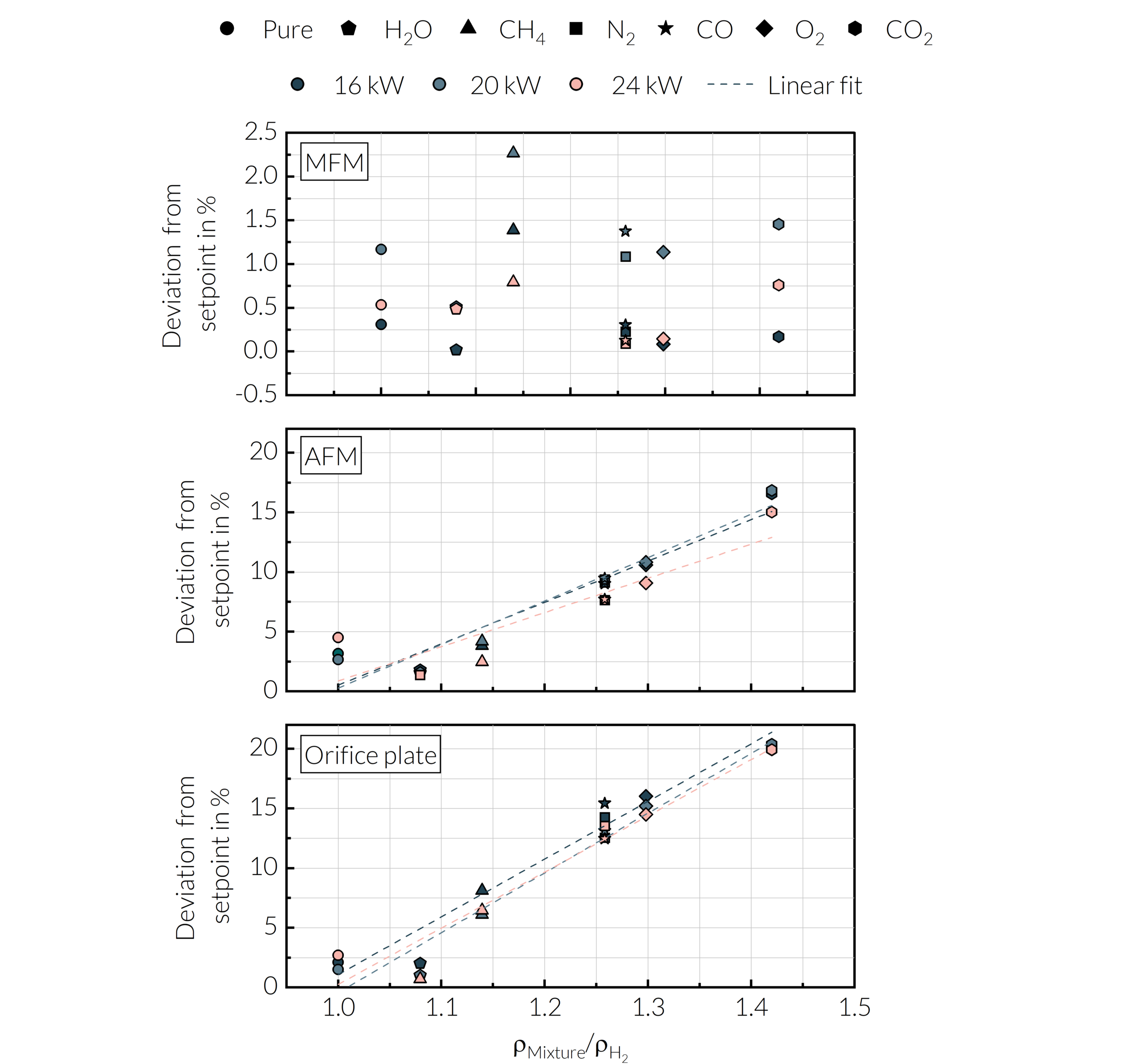
is “hydrogen” or even “98% hydrogen” e same
Fig.2: Effect of different impurity gases on the SOS of hydrogen.
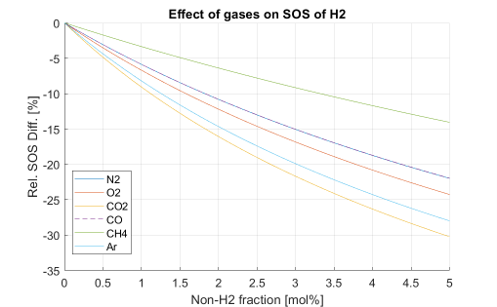
is “hydrogen” or even “98% hydrogen” e same
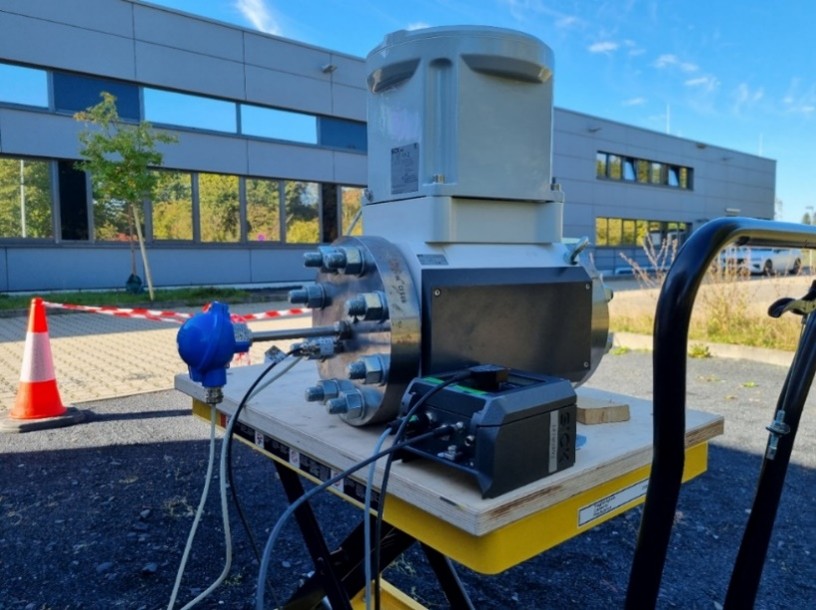
Fig.3: 4″ Ultrasonic Flow Meter (USM) prototype for H2 measurements from Endress+Hauser SICK



Latest News
Join the HyInHeat final event on 27 October during European Hydrogen Week!
cHEC Steel and aluminium are essential metals for European industry, backed by a longstanding and proud history of production. However, these sectors are highly energy-intensive, requiring conspicuous amounts of energy for their production processes. To meet the...
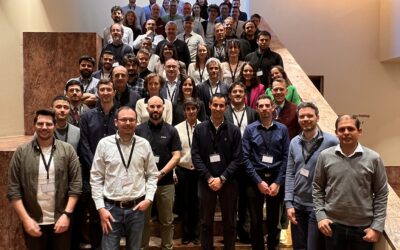
HyInHeat consortium meets in Bilbao to advance hydrogen heating solutions
HyInHeat consortium meets in Bilbao to advance hydrogen heating solutions On 24–25 March 2026, the HyInHeat consortium gathered in Bilbao for its General Assembly meeting, bringing together partners from across Europe to review progress and align on next steps.During...
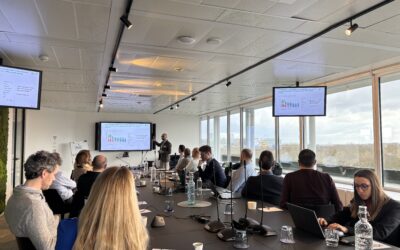
Hydrogen Scenario Workshop explores future pathways for aluminium and steel industries
Hydrogen Scenario Workshop explores future pathways for aluminium and steel industries What role could hydrogen play in the future of aluminium and steel industries? Last month, the HyInHeat project brought together experts from the aluminium, steel and hydrogen...

This project has received funding from the European Union’s Horizon Europe research and innovation programme under grant agreement No 101091456